- 7ACAF469539AE5BE731ED4CC5FA1B148

Amazon

Showing posts with label Transformer. Show all posts

TRANSFORMER OIL

TRANSFORMER OIL AND ITS PROPERTIES?DETERIORATION OF INSULATING OIL?

PRECAUTION AT A TIME OF TAKING OIL SAMPLE?

TRANSFORMER OIL: This is a synthetic mineral oil.It is prepare from fractional distillation of crude petrol.This is also known as mineral oil, insulating oil, switch gear oil etc.

transformer oil
Transformer oil

This is used for cooling,insulating, arc suppression in different electrical equipment like transformer, circuit breakers, switch gears etc.

PROPERTIES OF TRANSFORMER OIL: 

The properties of transformer oil is given below,

1.High specific resistance: They should be high specific resistance.Due to this insulating capacity of oil increases.

The minimum specific resistance at 90°C = 13*1012 ohm–cm

The minimum specific resistance at 27°C = 500*1012 ohm–cm

→ On increasing temperature the resistance of insulator decreases.

2.High dielectric strength: The dielectric strength of transformer oil means the maximum voltage at which transformer oil works without breakdown.

The minimum dielectric strength of transformer oil before use = 30 kV

The minimum dielectric strength of transformer oil after use = 20 kV

The maximum dielectric strength of new transformer oil = 55 kV

3.High flash point: The flash point of transformer is defined as the minimum temperature at which oil form vapour near its surface and it ignite or produce spark, when it comes near fire.So, the transformer oil should be high flash point.

The minimum value of flash point of transformer oil is 140°C.

4.High fire point: The minimum temperature at which transformer oil catch fire is known as fire point of transformer oil.

According to Indian standard the fire point of transformer oil 25% more than the flash point of transformer oil.

5.High pour point: The minimum temperature at which oil remains in liquid condition is know pour point of oil.

If the pour point of transformer oil will low, Then in winter or hilly area the maximum possibility of freezing the transformer oil.This effects the heat transferring of transformer by transformer oil.

So, the pour point of transformer oil should be -10°C (according to Indian standard).

6.No chemical impurities: The transformer oil should be free from chemical impurities.Because due to presence of chemical impurities it forms sludge that settle down in bottom of the transformer body.The transformer oil should be chemically inert.

7.Moisture less: It should be free from moisture.Because due to presence of moisture the insulating property of oil decrease and it also start the rusting of transformer body.It also effect the insulation of transformer winding.

8.Low viscosity: The transformer oil should have low viscosity.Due to low viscosity of oil it flow easily in transformer body, that is very effective for transformer cooling.

9.Free from dirt and dust: It should be free from dirt and dust.Due to presence of dirt and dust viscosity of transformer oil increases and it effects the heat transferring of transformer by transfer oil and also due to presence of dirt and dust in transformer oil sludge formation in transformer takes place.

10.Suitable permittivity: The permittivity value show the insulating permittivity of material, means higher the value of permittivity higher the insulating property of material and vice versa.So, the transformer oil should have suitable value of permittivity.

The permittivity of transformer oil should be 2.1 to 2.2.

DETERIORATION OF INSULATING OIL:

The decreases of dielectric strength of transformer oil is known as deterioration of transformer oil.

OR

When the standard value of transformer oil decrease, then it is known as deterioration of transformer oil.

The deterioration of transformer oil takes place due to following reasons:

1.Physical Deterioration: When dust, dirt and water mix with oil, then it is known as physical deterioration.The reason of physical deterioration is given below:

  • The tank of oil remains open.
  • The oil drum does not close properly.
  • The installation of electric equipment near the moisture.
  • The storage of oil is not proper.
2.Chemical Deterioration: The oxidization of oil is known as chemical deterioration.The reason of chemical deterioration of transformer oil is given below:
  • Over load condition of transformer.
  • Earth fault at transformer
  • Short circuiting fault at transformer.
→When the hot oil comes in contact with water and oxygen, then oxidation of oil takes place.
3.Gaseous Deterioration: When the temperature of oil increase it vapourizes.This is known as gaseous deterioration of oil.Due to this flash point of oil decrease and oil can catch fire easily.

PRECAUTION AT A TIME OF TAKING OIL SAMPLE:
The precaution at a time of taking oil sample is given below:
  • The oil sample should be taken from drain cock, that is situated bottom of the transformer oil tank. 
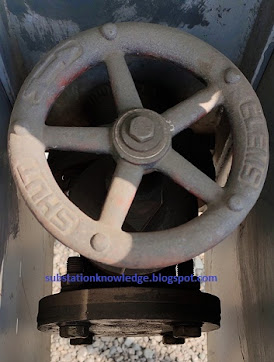
    Drain coke
    Drain coke

  • Drain coke should be clean by clean and dry cloth before taking oil sample.
  • The sample of oil should be taken by the transformer when the transformer is on load condition.
  • The oil sample should be taken in glass tube or bottle.The sample should not be taken in metal, rubber or plastic tube.
  • The glass tube should be clean and dry.
  • After taking sample, the oil filled bottle or tube should be covered properly.
  • The cover of glass tube or bottle should not be made of rubber.
  • The oil sample should be taken in sunny day.
→After taking sample, marking is should be done on oil filled bottle or tube with date and time.

Conclusion: The final conclusion is that transformer oil play a important role in transformer functioning.If we keep the above point regarding transformer oil in mind, then life of transformer increase and it works properly for a long time.

Important links:

SPECIAL TYPE TRANSFORMER CONNECTION

WHAT IS OPEN DELTA,INTER CONNECTED,SCOTT CONNECTION AND TERTIARY WINDING OF TRANSFORMER?   

1.OPEN DELTA CONNECTION: In this type of connection one phase remove from three phase delta connection,thus remains two phase form an open delta circuit.
By removing one phase from delta,remains two phase from V-shape.Thus it is also known as three phase V-V transformer.
The given below images show open delta connection type transformer.

Open delta connection

Uses: The use of open delta connection type transformer is given below:
1.When three phase load on transformer is much less than rated capacity of transformer and no small capacity transformer is available.
2.When one phase of delta connection type transformer is damage and thus we can use this type of connection.But load on the transformer should be 58% of the rated capacity of transformer.
3.When at starting the load on transformer is less.But in future it will be increase.So we use this type of connection.
Drawbacks:The drawbacks of this type of connection is given below:
1.The capacity of this type of transformer is 58% of delta-delta connection transformer.
2.The power factor of this type of transformer is less (86.6%).
3.On increasing load the voltage will become unbalanced.

2.INTER CONNECTED STAR CONNECTION: The connection of this type of transformer is like zig-zag.So this connection is also known as zig-zag connection.
In this type of connection primary winding may be star or delta connected,but secondary is in the form of zig-zag.Thus be obtain different phase by this connection.
The given below image shows the inter connected star connection:

Inter connected star connection

3.SCOTT CONNECTION: This connection is introduced by Charles F.Scott.So this connection is known as Scott connection.
This type of connection is mainly used to convert three phase supply into double phase and double phase supply into three phase.So this is also known as phase changing supply transformer.
The given below images show the scott connection transformer:

Scott connection
Scott connection

This type of transformer made by the combination of two single phase transformer.In above image horizontal transformer is known as main transformer and the vertical transformer whose one end of primary winding is tapped with mid point of primary winding of  main transformer is known as teaser transformer.Thus we get the supply from secondary of these transformer.
At the time of scott connection the main point should be remembered in mind:
1.The number of turns in primary winding of teaser transformer is 86.6% of the number of turns in primary winding of main transformer.
2.The number of turns in secondary of both the transformer is always same.So we gets the same voltage.
3.On three phase side the tapping is done at 50% on primary winding in main transformer and in teaser transformer the tapping is done at 86.6% on primary winding.
4.If number of turns in primary winding N1 and secondary winding N2.
Than transformer ratio of main transformer is,
K = N2/N1
and the transformation ratio of teaser transformer is,
K = N2/0.866N1
= 1.15 K
Uses: This type of transformer is used for those machines which works on double phase supply or single phase machines run separately (like: ac arc welding,ac traction,ac arc furnace etc).
Drawbacks: 
1.The main and teaser transformer works on different power factor,which is undesirable.
2.It works on only 86.6 capacity.

3.TERTIARY WINDING: In star-star connection type transformer.The third harmonic waves are more effective.So we cannot get pure sinusoidal wave with this transformer and also in unbalanced load the neutral point shift towards one of the phase.Due to this an extra delta winding is used in Y-Y transformer it is third winding of this transformer,So it is called tertiary winding.
The given below image shows the tertiary winding of a transformer.

Tertiary winding
Tertiary winding
Uses: The uses of tertiary winding in transformer is given below.
1.For the supply of phase compensating devices.
2.For the interconnection.
3.For the use of voltage winding in testing transformer.
→ In delta-delta,delta-star and star-delta transformer neutral is fixed.So we get pure sinusoidal wave with this transformer,because delta winding is a close circuit and it reduce the effect of third harmonic waves.


TYPES OF TRANSFORMER

DIFFERENT TYPES OF TRANSFORMER:
The different type of transformer is given below:

1.According to the construction of magnetic circuit:

a) Core type transformer: In this type transformer the winding is wound on the both side of limbs.The given below image shows the core type transformer.

Core type transformer
Core Type

Main features of core type transformer is given below:
a) It provides a single magnetic path.
b) The primary and secondary winding are mostly of cylindrical form and concentric.
c) Most of the portion of the core gets covered by two winding.
d) The two winding are uniformly distributed over two limbs of transformer.
e) The repairing of winding is easy.
f) Due to uniform distribution of winding natural cooling is quite effective.

b) Shell type transformer: In this type of transformer the winding (both primary and secondary) is wound on the central limb.So entire flux passes through the central part of iron core.But outside the central core it divides into two half going in each direction.The given below image shows the shell type transformer.

Shell type transformer
Shell Type

Main features of Shell type transformer is given below:
a) The core provides double magnetic path.
b) It provide good mechanical protection to winding,because it wound on central limb.
c) Low leakage flux.
d) Natural cooling is poor.

→ If shell type and core type transformer compare,then we see that core type transformer has more space for insulation so it is preferred for high voltage.

2.According to  the connections:

1.Star-Delta connection: In this type of connection the voltage phase displacement in both side voltage is 30 degree.The total bush in this type of transformer is 7 (4 in HV side and 3 in LV side).The advantages and disadvantages of this type of transformer is given below:
Advantages:
a)The primary is connected to star and secondary is connected in delta.So,the primary side phase voltage is less (57.73%) to the line voltage so the less number of turns as well as insulation required in this type of transformer.
b) In the primary side due to presence of neutral point protective relay can be used for protection purpose.
c) There is no possibility of displacement of neutral point.
d) Due to delta connection in secondary side the third harmonic waves does not effective.
Disadvantages:
a) Due to 30 degree phase displacement in both side voltage,this cannot be used in parallel with star-star or delta-delta connected transformer.
Application:
This connection is used in step-down power transformer.Mostly in secondary transmission substation.

2. Delta-Star connection: In this type connection the primary of transformer is delta and secondary is star connected.The voltage phase displacement in botn side voltage is 30 degree.The given image shows the delta-star connection transformer.The given below image show the delta star connection type transformer.

Delta-star transformer
Delta star connection

Advantages:
a) The secondary side is star connected.So secondary side phase voltage is less (57.7%) than line voltage.So less number of turns in secondary side and low insulation level is required.
b) In the secondary side due to presence of neutral point protective relay can be used for protection purpose.
c) Due to delta connection in primary side the third harmonic waves does not effective.
Disadvantages:
a) Due to 30 degree phase displacement in both side voltage,this cannot be used in parallel with star-star or delta-delta connected transformer.
Applications:
a) This connection is used for step-up transformer and this type of transformer is used at generating station for high voltage transmission.
b) This connection is also used for 3 phase 4 wire distribution transformer.

3.Delta-Delta connection: In this type connection the primary and secondary side of transformer is delta connected.The phase voltage displacement on both side is zero degree.These type of connections are suitable for large transformer working on low voltage and high current.
Advantages:
a) Current in winding is reduced to 57.7% of line current.So cross sectional area of conductor reduces.
b) Unbalanced load do not effect much.
c) Third harmonic waves does not effective.
Disadvantages:
a) In this system neutral point is not available.Therefore 3 phase 4 wire connection is not possible.
b) High insulation is required.
c) Large number of turns required.
d) We cant obtain low voltage as similar to star-star connection.
Applications:
This connection type of transformer is used to low voltage transmission sub-stations.

4.Star-Star connection: In this type of connection the primary and secondary side of transformer is star connected.The phase voltage displacement on both side is zero degree.These type of connection are suitable for high voltage transformer which have small size.
The given image shows the star-star connected transformer,two NCT is used for neutral point earthing and for protection purpose:

Star-Star transformer
Add caption
Star star connection

Advantages:
a) The phase voltage is less (57.7%) to line voltage.So less number of turns required.
b) Less insulation required.
c) Neutral point is available.So this type of connection is used for 3 phase 4 wire connection.
d) By earthing the neutral point system stability increases.
e) Due to presence of neutral point protective relay can be used for protection purpose.
f) In this type of connection line current equals to phase current.So conductor size is thick and it can bear overload current and short circuit current at some extent.So safety factor of system increased.

Disadvantages:
a) If the neutral is not earthed.Than at the time of unbalanced load neutral is shifted towards one of phase.So earthing of neutral is necessary.
b) Due to open circuit,third harmonic waves most effect this type of connection.
Applications:
This type of connection is used for transformer which is used in high voltage distribution substation.

3.According to utility: 

1.Power transformer: The power transformers should be designed for maximum efficiency at or near full load.So,it is put in operation during load periods and disconnected during light loads periods.
Power transformer are designed to have greater leakage reactance than is permissible in distribution transformers because in the case of power transformers,voltage regulation is less important than the current limiting effect of higher leakage reactance.The given shows the power transformer.
These are used in generating stations and substations at each end of power transmission lines.This transformer rating above 200KVA.
The given below image shows the power transformer.

Power transformer
Power transformer

2.Distribution transformer: The transformer used to step-down voltage to a standard service voltage is known as distribution transformer.They are kept in operation all the 24 hours in a day whether they are carrying any load or not.Therefore energy loss in iron throughout the day while energy loss due to copper losses when transformer is loaded.Therefore power transformer should be designed to have maximum efficiency at a load much lower than full load (about 50%).
This transformers rating up to 200KVA.
The given image shows the distribution transformer.

Distribution transformer


TRANSFORMER

 WHAT IS TRANSFORMER? RATIO OF TRANSFORMER? TERM IN RATING PLATE OF TRANSFORMER?

TRANSFORMER: It is a static device,which work on principal of static and mutual induction and transforms a.c. power from one voltage to other voltage without change in frequency.

The emf equation of transformer is given below:

E1 = 4.44fϕN1 volt

E2 = 4.44fϕN2 volt

E1 = Primary side emf

E2 = Secondary side emf

f = frequency

ϕ = maximum value of flux

N1 = primary side number of turns

N2 = secondary side number of turns


Transformer
Transformer

Ratio of transformer is given below:

1.Voltage Ratio: It is the ratio of secondary voltage to primary voltage.

K = V2/V1

For step up transformer, V2>V1, K>1

For step down transformer, V2<V1, K<1

2.Turn Ratio: It is the ratio of primary turns to secondary turn.

Turn ratio = N1/N2

Rating: The rating plate of transformer shown below.

Power transformer rating plate

Rating plate transformer

The meaning of different term in rating plate is given below:
1.Capacity of transformer: The transformer capacity is always in KVA rating because the copper loss depends upon current and core loss depends upon voltage means total losses in transformer depends upon voltage ampere product.Thus rating does not depend upon power factor.So it is always in KVA rating.In given rating plate the rating of transformer is 20 MVA

2.Voltages at no load: It is that voltage when transformer in service but load at transformer is zero.
In given rating plate high voltage side (HV) is 66 KV and Low voltage side (LV) is 11 KV.

3.Amperes: It is that maximum value of current at which transformer works satisfactory above this value of current the winding of transformer may be burn and may be any other electrical and structural damage occurs.In given rating pate the primary side current (HV) is 174.95 A and secondary side (LV) current is 1049.70 A.

4.BIL (basic insulation level) line end voltage: It is that value of voltage that transformer withstand without any damage of insulation at the time of impulse voltage (lighting,surge voltage etc).In given rating plate the HV side BIL is 375 KVp and LV side and neutral side BIL is 95 KVp.

5.Type of cooling: It is the method that is used for transformer cooling.In given rating plate oil natural air natural (ONAN) type cooling is used.

6.Frequency: The rated frequency is that on which transformer is designed to work.In rating plate the frequency is 50 Hz.It is the standard frequency in India.

7.Vector group (YNyn0) and number of phase: This vector group show that transformer is star-star transformer means HV side as well as LV side is transformer connected and this type of power transformer two NCT is connected from both side neutral.In given rating plate 3 phase is shown means this transformer is 3 phase transformer.

8.Weight of bare copper and with insulation: The rating plate also give information about weight of bare copper winding and with insulation.in given rating plate bare copper weight is 9300 kg and with insulation weight is 11000 Kg.

9.Core weight: The core of the transformer is that on which transformer is situated.In given rating plate the core weight is 17500 Kg.

10.Weight of oil and liters: It the weight of transformer oil in kg and liters that is filled in transformer.
In given rating plate weight is 1200 kg and 13900 liters.

11.Transport mass: It is total mass of transformer.In given rating plate is 46000 kg.

12.Max short current duration: It is the time which can transformer withstand at the time of short circuit current (generally 25 times the rated current) on secondary side.In given rating plate it is 5 sec.

13.Ambient temperature: The average temperature of transformer is known as ambient temperature.In given plate it is given 50 degree celsius,means average of 24 hours temperature of transformer does not exceed 50 degree celsius.


Coupon

Popular Posts